The wildlife exemption in Grimes County
The wildlife exemption lets Grimes County landowners hold on to their 1-d-1 agricultural valuation - and its tax savings - by managing land for native species like white-tailed deer and bobwhite quail. Because the county sits in the Post Oak Savannah, TPWD's regional standards for that ecoregion set the bar your plan is judged against.
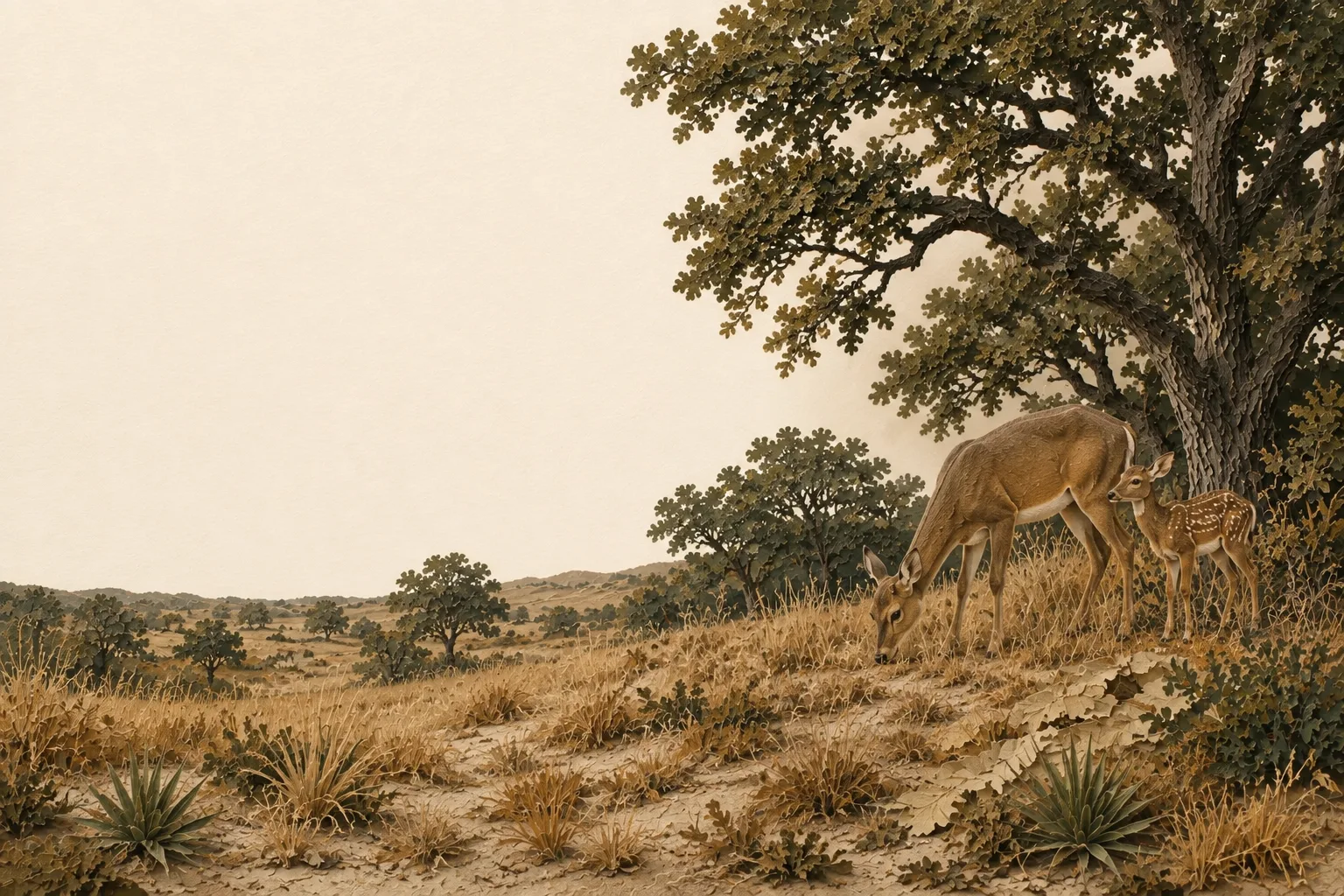
The Post Oak Savannah rolls between the Blackland Prairies and the Pineywoods - a mosaic of post oak and blackjack oak woodlands, improved pastures, and sandy-loam soils. Much of this region was converted to bermudagrass pasture, so wildlife management here often centers on restoring native plant communities and managing the yaupon understory that shades out forage.
The Post Oak Savannah carries strong and growing deer populations, and its patchwork of woods and pasture makes it one of the most practical regions in Texas to run a credible wildlife management program on 20–100 acres. Typical target species for Grimes County plans include white-tailed deer, Rio Grande turkey, bobwhite quail, mourning dove, and grassland songbirds. The recurring habitat challenges - yaupon and eastern redcedar encroachment, bermudagrass monocultures with little wildlife value, and habitat fragmentation from subdivision - are what a good management plan turns into qualifying work.
On the ground in Grimes County
Anderson is the county seat, while Navasota and Plantersville anchor much of the better-known rural landscape. Between the Brazos and Navasota systems, Grimes County is rolling Post Oak country of sandy soils, oak mottes, pasture, ponds and brushy creek bottoms. Wildlife management can restore native grass, keep enough understory for travel and shelter, protect riparian strips and improve water. A Grimes County plan works best when it shows how open pasture and woody cover are being arranged into usable edge habitat rather than describing the property as one undifferentiated ranch.
Grimes County lies in the Post Oak Savannah and is assigned to TPWD's Post Oak Savannah wildlife-use appraisal region - the legal map that sets the reduced-tract acreage rule below.
Is there an acreage minimum in Grimes County?
Did the tract get smaller since January 1 of last year?
There is no wildlife acreage test in Grimes County at all. Whatever the size, file Comptroller Form 50‑129 with a PWD‑885 plan. A 7-acre tract that already carried 1‑d‑1 (ag exempt) and was never split can convert with no penalties.
The Grimes County appraisal district has published its figure. The legal minimum land requirement is 12.5 acres. Wildlife management property associations, and land designated as habitat for a special listed species: 10 acres.
Source: Grimes Central Appraisal District - 2026 Eligibility Requirements for Wildlife Management.
See how Grimes County compares: minimum acreage for all 254 Texas counties →
How it works here
Grimes County follows the statewide 1-d-1 framework (Texas Tax Code §23.51(7)); the local variables are your appraisal district's filing habits and the Post Oak Savannah intensity standards:
- Start from an existing ag or timber valuation. Wildlife management is a conversion of qualified open-space land - check eligibility if your status is unclear.
- File a wildlife management plan (TPWD form PWD‑885) with the Grimes County appraisal district, attached to Comptroller Form 50‑129, between January 1 and April 30. What goes in the plan →
- Perform at least 3 of the 7 practices each year at Post Oak Savannah intensity levels - see the local examples below.
- Document everything - dates, photos, quantities. When the chief appraiser requests an annual report (PWD‑888), you'll answer with records, not recollections.
- No minimum acreage applies unless your tract got smaller since January 1 of last year. If it did, Grimes County's figure is covered above - the district picks one number for the whole county, and the plan is still the application either way.
The 7 practices, Post Oak Savannah-style
These are the kinds of activities appraisal districts in the Post Oak Savannah recognize as real management - your plan picks at least three. The Post Oak Savannah region guide covers the species, habitat problems and intensity standards behind them.
