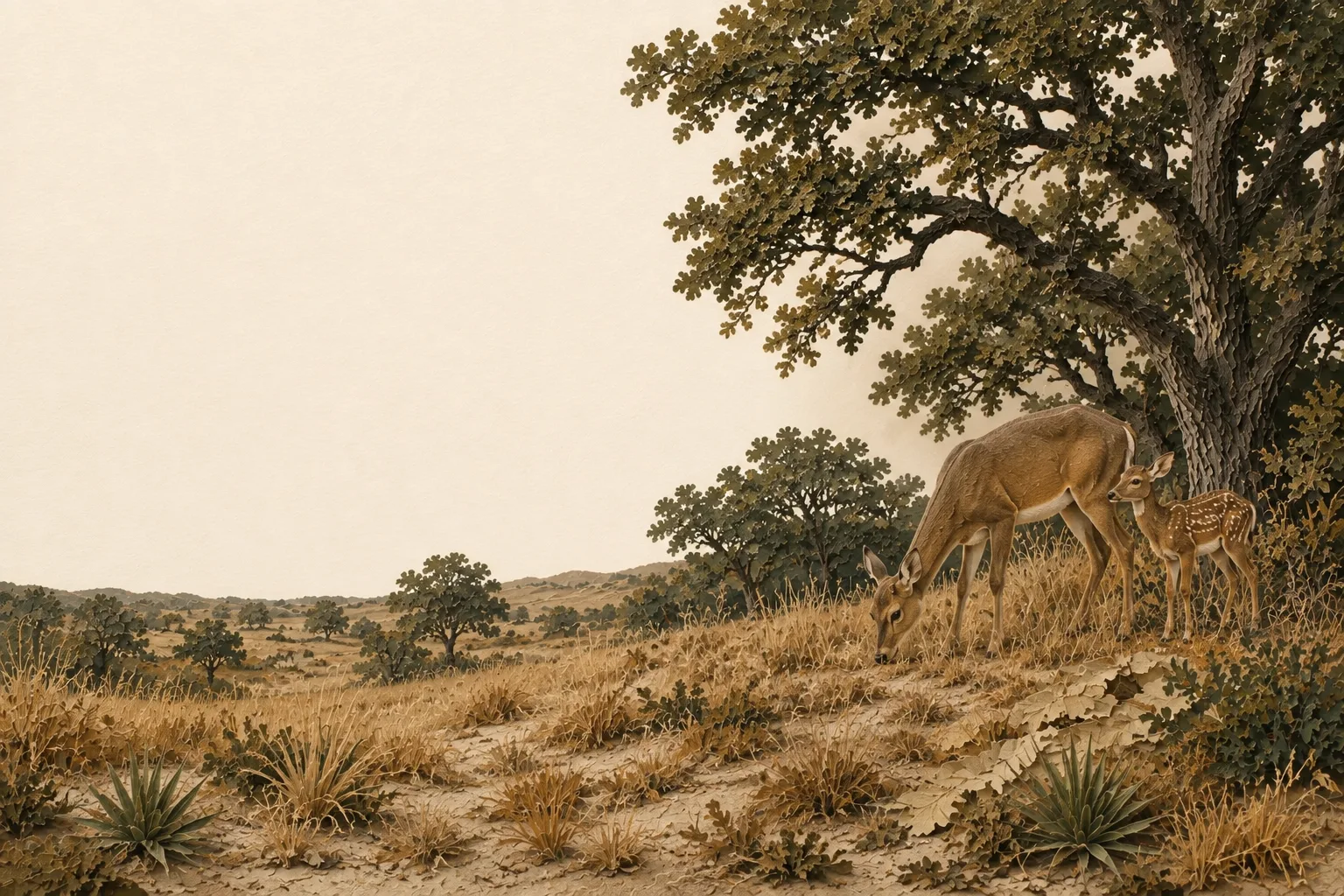
The Post Oak Savannah on the ground
The Post Oak Savannah rolls between the Blackland Prairies and the Pineywoods - a mosaic of post oak and blackjack oak woodlands, improved pastures, and sandy-loam soils. Much of this region was converted to bermudagrass pasture, so wildlife management here often centers on restoring native plant communities and managing the yaupon understory that shades out forage.
The Post Oak Savannah carries strong and growing deer populations, and its patchwork of woods and pasture makes it one of the most practical regions in Texas to run a credible wildlife management program on 20–100 acres. Typical target species for plans in this region include white-tailed deer, Rio Grande turkey, bobwhite quail, mourning dove, and grassland songbirds.
What limits wildlife here
A wildlife management plan is most convincing when it takes on the problems that actually constrain wildlife in its region rather than listing generic good deeds. In the Post Oak Savannah, those are yaupon and eastern redcedar encroachment, bermudagrass monocultures with little wildlife value, and habitat fragmentation from subdivision - and each one is a practice waiting to be written down. A plan that names a real local problem, commits to work at regional intensity, and documents it is the plan that gets approved and stays approved.
Start with three
You need at least three of the seven qualifying practices each year under Texas Tax Code §23.51(7). For most Post Oak Savannah landowners the natural opening three are habitat control, supplemental water and census counts: habitat control is where the real management happens, water is the quickest to install and the easiest to photograph, and a census generates dated evidence every single year. You can change which three you run as the land changes - the statute asks for three practices performed and documented, not three particular practices forever.
