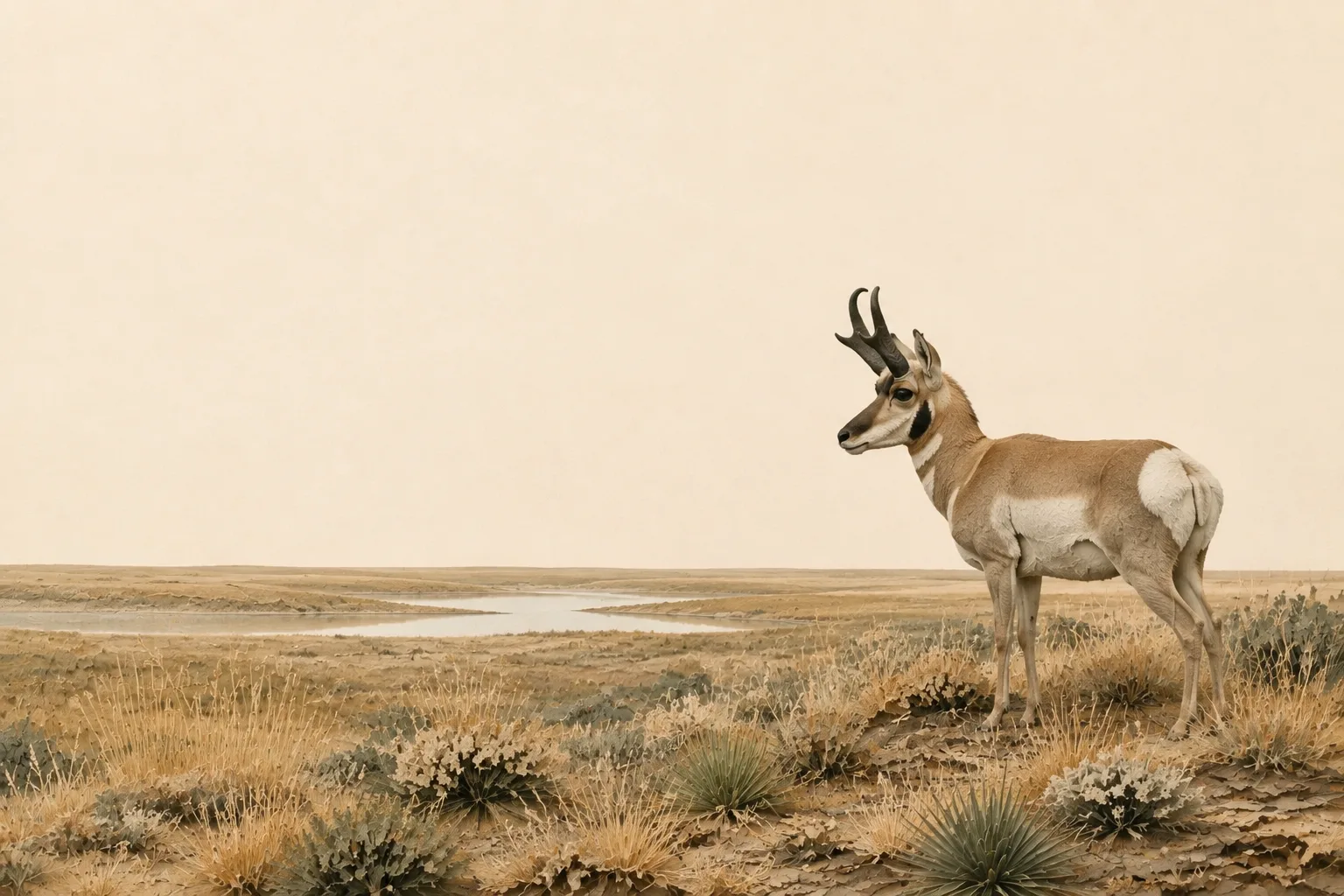
The wildlife exemption in Moore County
Moore County sits in the heart of the High Plains - shortgrass prairie, playa lakes, and mule deer country on the Llano Estacado. For landowners here, the 1-d-1 wildlife management valuation is the most practical way to keep agricultural-level property taxes without running livestock.
The High Plains of the Panhandle and South Plains are flat shortgrass prairie over the Ogallala Aquifer, dotted with more than 19,000 playa lakes - shallow seasonal wetlands that host hundreds of thousands of wintering waterfowl and cranes. Wildlife management here often pairs playa restoration with lesser prairie-chicken, quail, and mule deer habitat work on retired farmland.
Mule deer work the breaks and CRP grasslands while whitetails follow the creek systems; playa lake restoration is among the highest-value practices an appraisal district will see on a High Plains management plan. Typical target species for Moore County plans include mule deer, pronghorn, scaled quail, lesser prairie-chicken, sandhill cranes, native grassland songbirds, and wintering waterfowl on playas. The recurring habitat challenges - playa sedimentation from cropland runoff, declining aquifer and shelterbelts, and conversion of CRP grassland back to row crops - are what a good management plan turns into qualifying work.
On the ground in Moore County
North plains, industry, playas. Moore County’s mix of farm ground, shortgrass and heavy industrial development makes undisturbed habitat patches especially valuable. Playas, native strips, shelterbelts and drainage corridors can function as water, cover and travel habitat when they are protected from unnecessary clearing. For a Moore County wildlife exemption, the plan should show how those pieces survive alongside the working land use and how the owner will document wildlife response over time.
Moore County lies in the High Plains and is assigned to TPWD's High Plains wildlife-use appraisal region - the legal map that sets the reduced-tract acreage rule below.
Is there an acreage minimum in Moore County?
Did the tract get smaller since January 1 of last year?
There is no wildlife acreage test in Moore County at all. Whatever the size, file Comptroller Form 50‑129 with a PWD‑885 plan. A 7-acre tract that already carried 1‑d‑1 (ag exempt) and was never split can convert with no penalties.
The Moore County appraisal district has not published its exact figure. However, the legal minimum land requirement for this county in the High Plains region is between 25–50 acres (96–98%). If your acreage is inside of this range, we recommend to file the plan either way; the county will apply whatever they adopted.
See how Moore County compares: minimum acreage for all 254 Texas counties →
How it works here
Moore County follows the statewide 1-d-1 framework (Texas Tax Code §23.51(7)); the local variables are your appraisal district's filing habits and the High Plains intensity standards:
- Start from an existing ag or timber valuation. Wildlife management is a conversion of qualified open-space land - check eligibility if your status is unclear.
- File a wildlife management plan (TPWD form PWD‑885) with the Moore County appraisal district, attached to Comptroller Form 50‑129, between January 1 and April 30. What goes in the plan →
- Perform at least 3 of the 7 practices each year at High Plains intensity levels - see the local examples below.
- Document everything - dates, photos, quantities. When the chief appraiser requests an annual report (PWD‑888), you'll answer with records, not recollections.
- No minimum acreage applies unless your tract got smaller since January 1 of last year. If it did, Moore County's figure is covered above - the district picks one number for the whole county, and the plan is still the application either way.
The 7 practices, High Plains-style
These are the kinds of activities appraisal districts in the High Plains recognize as real management - your plan picks at least three. The High Plains region guide covers the species, habitat problems and intensity standards behind them.
