The wildlife exemption in Ward County
The wildlife exemption lets Ward County landowners hold on to their 1-d-1 agricultural valuation - and its tax savings - by managing land for native species like mule deer and pronghorn. Because the county sits in the Trans-Pecos, TPWD's regional standards for that ecoregion set the bar your plan is judged against.
The Trans-Pecos is Texas at its biggest: Chihuahuan Desert basins, sky-island mountain ranges, and desert grasslands running to the Rio Grande. Properties are measured in sections, water is the limiting factor for nearly all wildlife, and management plans here revolve around water development, desert grassland recovery, and pronghorn and mule deer habitat.
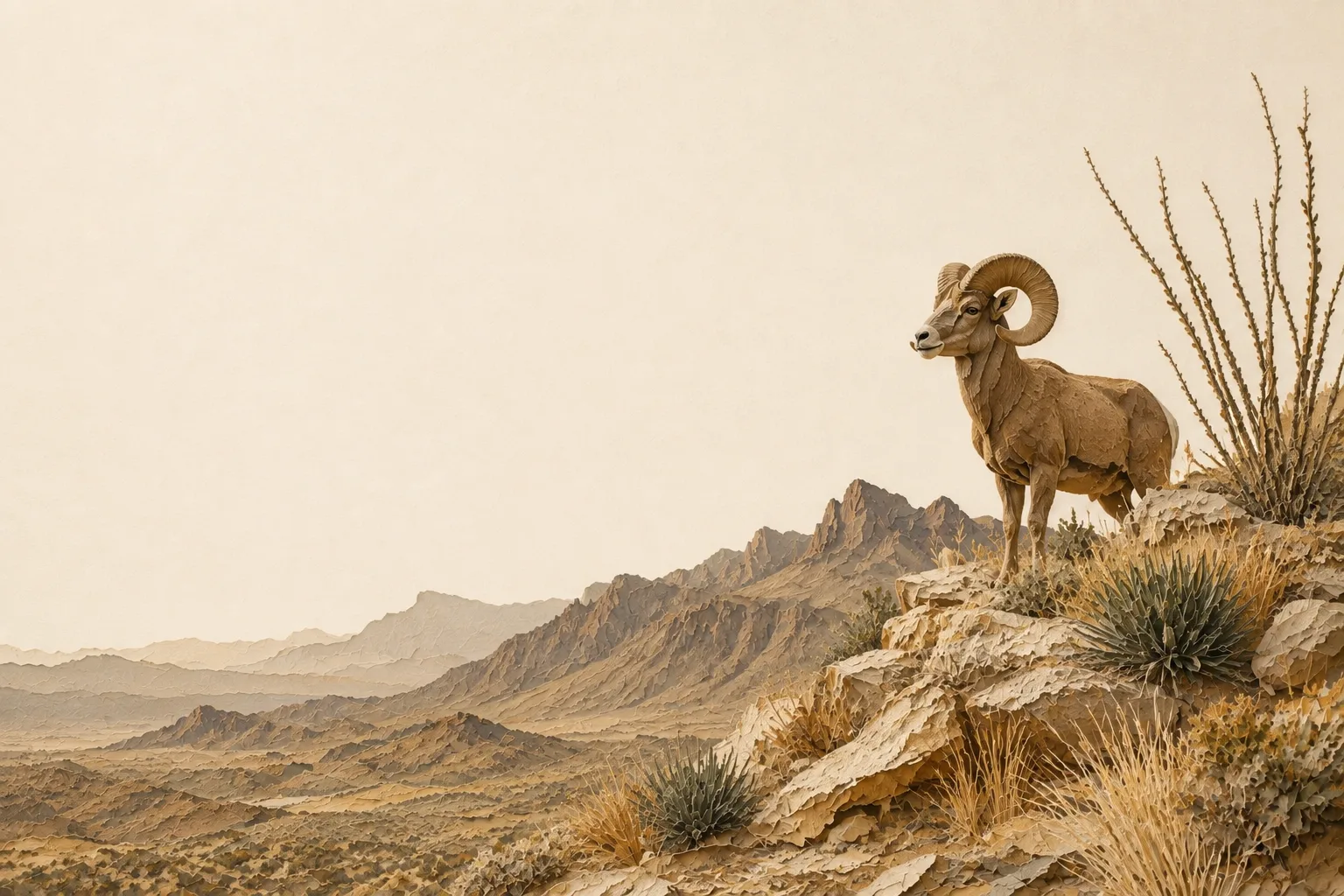
Desert mule deer are the marquee species across the Trans-Pecos, with pronghorn on the grassland flats; a single well-placed water development can anchor an entire year’s practice log in this country. Typical target species for Ward County plans include mule deer, pronghorn, desert bighorn sheep, scaled quail, Gambel’s quail, and golden eagles. The recurring habitat challenges - creosote and tarbush invasion of desert grasslands, scarce and declining surface water, and fence barriers to pronghorn movement - are what a good management plan turns into qualifying work.
On the ground in Ward County
Monahans and the sandhills sit in arid Permian Basin country shaped by oil development, desert flats, mesquite and Pecos River influence. On a wildlife-managed tract, the useful work is often unglamorous: stabilize disturbed soil, preserve native cover along draws, maintain dependable water and keep roads or pads from severing every habitat connection. The Ward County plan should be drought-aware and practical, using the pieces of native range that remain rather than trying to manufacture a greener landscape than West Texas can support.
Ward County reads as Trans-Pecos habitat on the ground, but TPWD assigns it to the Trans Pecos wildlife-use appraisal region for reduced-tract acreage rules - two different maps, and the legal one controls the numbers below.
Is there an acreage minimum in Ward County?
Did the tract get smaller since January 1 of last year?
There is no wildlife acreage test in Ward County at all. Whatever the size, file Comptroller Form 50‑129 with a PWD‑885 plan. A 7-acre tract that already carried 1‑d‑1 (ag exempt) and was never split can convert with no penalties.
The Ward County appraisal district has not published its exact figure. However, the legal minimum land requirement for this county in the Trans Pecos region is between 33.3–100 acres (97–99%). If your acreage is inside of this range, we recommend to file the plan either way; the county will apply whatever they adopted.
See how Ward County compares: minimum acreage for all 254 Texas counties →
How it works here
Ward County follows the statewide 1-d-1 framework (Texas Tax Code §23.51(7)); the local variables are your appraisal district's filing habits and the Trans-Pecos intensity standards:
- Start from an existing ag or timber valuation. Wildlife management is a conversion of qualified open-space land - check eligibility if your status is unclear.
- File a wildlife management plan (TPWD form PWD‑885) with the Ward County appraisal district, attached to Comptroller Form 50‑129, between January 1 and April 30. What goes in the plan →
- Perform at least 3 of the 7 practices each year at Trans-Pecos intensity levels - see the local examples below.
- Document everything - dates, photos, quantities. When the chief appraiser requests an annual report (PWD‑888), you'll answer with records, not recollections.
- No minimum acreage applies unless your tract got smaller since January 1 of last year. If it did, Ward County's figure is covered above - the district picks one number for the whole county, and the plan is still the application either way.
The 7 practices, Trans-Pecos-style
These are the kinds of activities appraisal districts in the Trans-Pecos recognize as real management - your plan picks at least three. The Trans-Pecos region guide covers the species, habitat problems and intensity standards behind them.
