The wildlife exemption in Rockwall County
Rockwall County land qualifies for the same wildlife management valuation used across Texas - same statute, same forms - but the practices that succeed here are pure Blackland Prairies. Get the regional details right and the tax side takes care of itself.
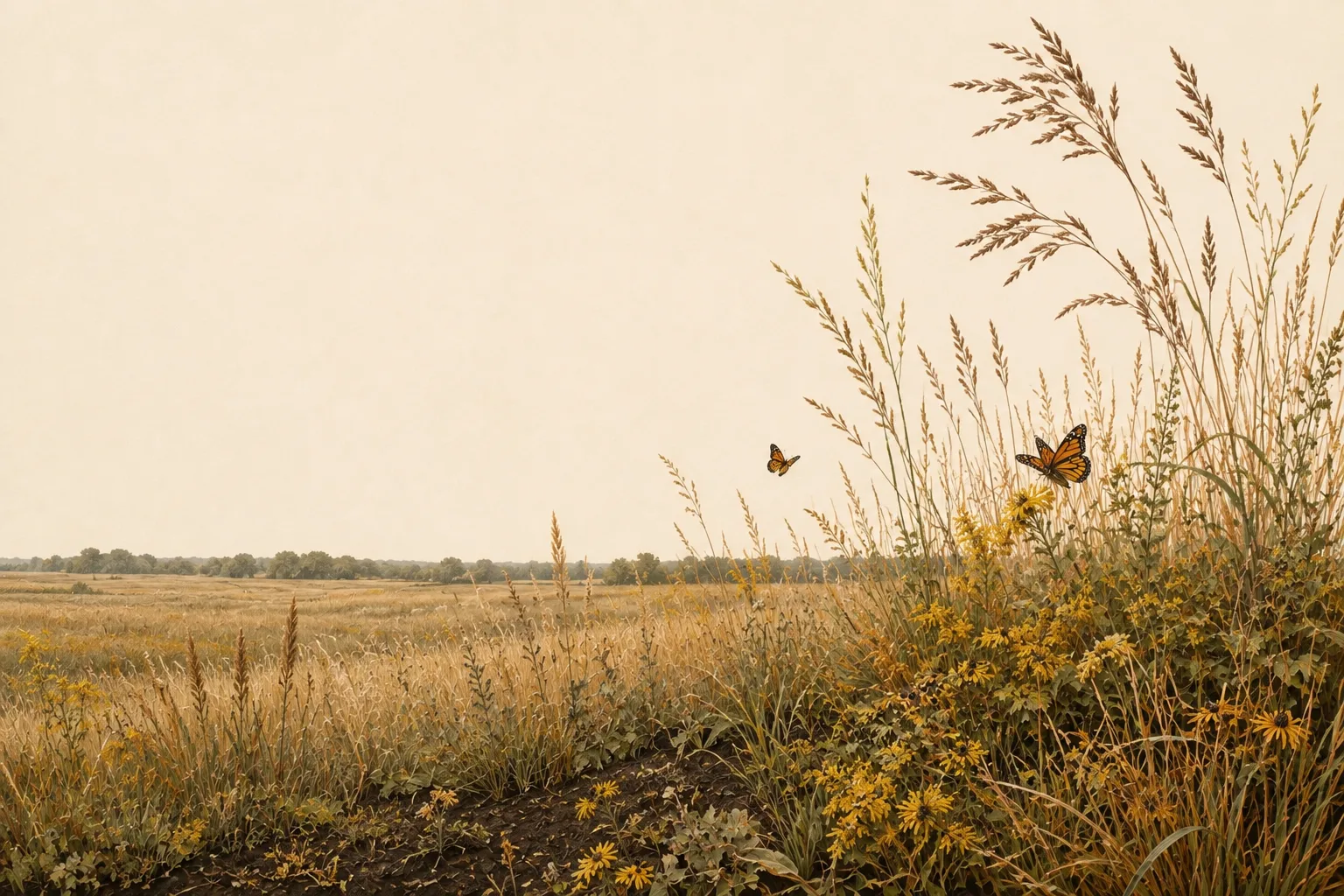
The Blackland Prairies run in a crescent from the Red River through Dallas to San Antonio - deep, fertile black clay that once grew tallgrass prairie and now grows subdivisions and row crops. Less than one percent of the original tallgrass remains, which makes prairie restoration on Blackland properties both ecologically important and highly credible with appraisal districts.
Deer populations in the Blacklands concentrate along creek corridors and remaining woodlands; many successful wildlife management programs here focus on grassland birds and pollinators rather than deer alone - a fully qualifying approach under 1-d-1. Typical target species for Rockwall County plans include white-tailed deer, bobwhite quail, grassland songbirds like meadowlarks and dickcissels, waterfowl on stock tanks, and native pollinators. The recurring habitat challenges - near-total loss of native tallgrass prairie, johnsongrass and KR bluestem invasion, and intense development pressure - are what a good management plan turns into qualifying work.
On the ground in Rockwall County
Rockwall is Texas’s smallest county by area and now overwhelmingly part of the Dallas metro, so qualifying open-space tracts are uncommon. That makes the remaining Blackland prairie, field edges and creek habitat more - not less - important. The Rockwall County plan should be compact and realistic: native prairie restoration, invasive control, riparian buffers and bird census fit the scale far better than large-ranch prescriptions. The county-specific story is wildlife management of remnant open land inside a dense suburban landscape.
Rockwall County lies in the Blackland Prairies and is assigned to TPWD's Blackland Prairie wildlife-use appraisal region - the legal map that sets the reduced-tract acreage rule below.
Is there an acreage minimum in Rockwall County?
Did the tract get smaller since January 1 of last year?
There is no wildlife acreage test in Rockwall County at all. Whatever the size, file Comptroller Form 50‑129 with a PWD‑885 plan. A 7-acre tract that already carried 1‑d‑1 (ag exempt) and was never split can convert with no penalties.
The Rockwall County appraisal district has published its figure. The legal minimum land requirement is 12.5 acres (92%). Wildlife management property associations, and land designated as habitat for a special listed species: 10 acres (90%).
Source: Rockwall Central Appraisal District Wildlife Management Special Valuation Guidelines - A Supplement to the State of Texas Guidelines for Qualification of Ag Land in Wildlife Management Use, Adopted for Tax Year 2022, December 8, 2021.
See how Rockwall County compares: minimum acreage for all 254 Texas counties →
How it works here
Rockwall County follows the statewide 1-d-1 framework (Texas Tax Code §23.51(7)); the local variables are your appraisal district's filing habits and the Blackland Prairies intensity standards:
- Start from an existing ag or timber valuation. Wildlife management is a conversion of qualified open-space land - check eligibility if your status is unclear.
- File a wildlife management plan (TPWD form PWD‑885) with the Rockwall County appraisal district, attached to Comptroller Form 50‑129, between January 1 and April 30. What goes in the plan →
- Perform at least 3 of the 7 practices each year at Blackland Prairies intensity levels - see the local examples below.
- Document everything - dates, photos, quantities. When the chief appraiser requests an annual report (PWD‑888), you'll answer with records, not recollections.
- No minimum acreage applies unless your tract got smaller since January 1 of last year. If it did, Rockwall County's figure is covered above - the district picks one number for the whole county, and the plan is still the application either way.
The 7 practices, Blackland Prairies-style
These are the kinds of activities appraisal districts in the Blackland Prairies recognize as real management - your plan picks at least three. The Blackland Prairies region guide covers the species, habitat problems and intensity standards behind them.
